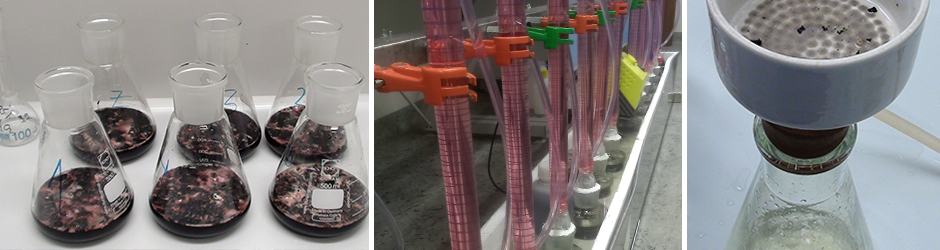


In our own laboratory, CROTEH’s experts carry out tests of biogas production process and determination of biogas potential as well as analysis and characterization of biodegradable waste materials. The determination of the biogas potential of organic waste materials is the basis for „tailor-made“ design of efficient and sustainable technologies in the field of management of municipal waste as well as management of brewery, food, paper and dairy industry wastes.
Biogas potential
There are several laboratory methods for determination of the biogas potential of organic materials and these methods can be divided into two basic groups: pressure and volumetric methods. Standardly, these methods can be performed during 21, 90, 100 and 270 days. During the pressure methods, volume of biogas is obtained by measuring the pressure in an enclosed reactor while volume of biogas from the volumetric methods is obtained directly from the reactor eudiometer, plastic bags or gas meter which can directly measure the volume of methane without carbon dioxide and hydrogen sulfide.
In our laboratory the biogas potential is determined by the volumetric method for the determination of the GS21 parameter. The analysis is usually conducted during 21 days and is applicable for almost all types of organic substrates. The results obtained from the biogas potential tests are expressed in NL/kgDM.
Biodegradability
During determination of the biodegradability of municipal solid waste and other types of wastes, valuable information are gathered which facilitate the decision-making process within the entire waste management system, especially during the design and construction of waste management centers. Although the composition of municipal solid waste depends on a number of parameters, the municipal solid waste of major European cities is very similar in composition and consist of a significant share of biodegradable fraction.
According to available information, most parts of the produced biodegradable municipal waste is still landfilled in the Republic of Croatia. In order to increase awareness of people and knowledge about the need for a more rational and efficient waste management, it is necessary to show and demonstrate how certain waste materials are suitable for reuse, i.e. savings through energy production.
Laboratory services
Our laboratory offers the following services:
- determination of biogas potential of organic waste substrates
- determination of the aerobic biological stability of waste materials (RDRI, AT4)
- waste sampling for analysis
- conduction of experiments of anaerobic treatment of waste materials
- determination of dry matter content, loss of ignition and ash content